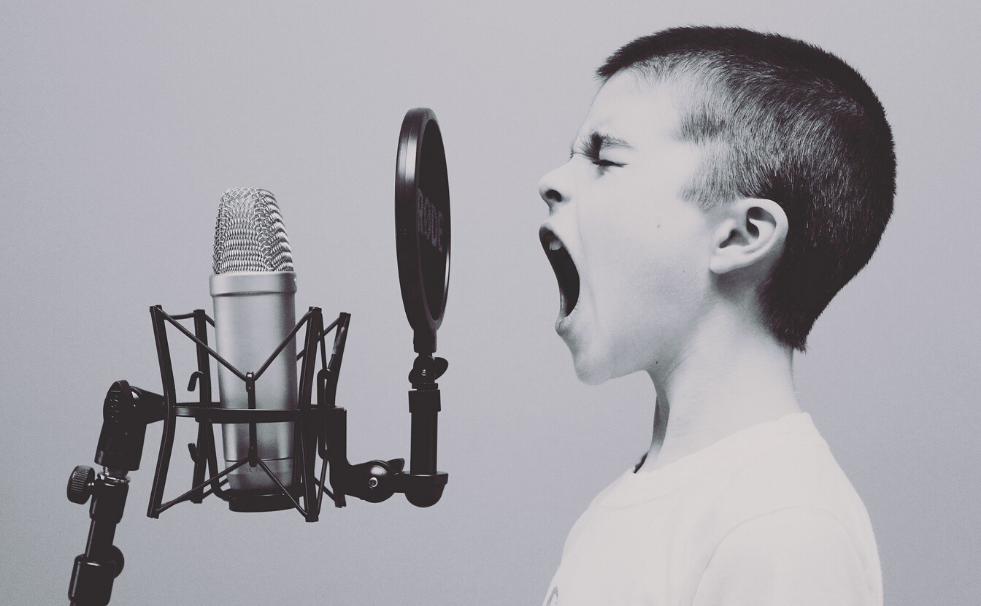
‘We must practice tolerance to the views of others. Intolerance is as much dangerous to democracy as to the person himself.’[1]
Freedom of speech and expression is the most basic right for a citizen in a democracy. How can you have a Government by the people, where the voices of people are muted by fear or force? Thus, freedom of Speech and Expression is considered the lifeblood of any democracy.
The evolution of freedom of speech as an ideal can be traced through history. The underlying principle is toleration, as propounded by thinkers like Voltaire, John Locke, and J.S Mill. Toleration upholds pluralism and respects the diversity of thought. Voltaire, for instance, said, ‘I detest what you say but will defend to death your right to say it.’
In his ‘On Liberty,’ J.S Mill explains why personal autonomy, and by extension the right to have an opinion and express it, is necessary for individual development and in the quest to find the truth.
If all mankind minus one, were of one opinion, and only one person were of the contrary opinion, mankind were no more justified in silencing that one person, than he, if he had power, would be justified in silencing mankind.
The English philosopher further argued, ‘If the opinion is right, they are deprived of the opportunity of exchanging error for truth; and if wrong, they lose….the clearer perception and livelier impression of truth produced by its collision with error.’
People should be free to express their opinion toward Government policies and criticize or validate the actions of public servants. A citizen in a democracy is more likely to accept collective decisions against him if he is convinced he can express grievances or opposition. This gives him the relief that he has a chance to create a public consensus against the decision if he so chooses.
Everyone has the right to freedom of opinion and expression; this right includes freedom to hold opinions without interference and to seek, receive and impart information and ideas through any media and regardless of frontiers – Article 19, UN Universal Declaration of Human Rights
Article 19(1)(a) of the Constitution of India deems the right to Freedom of Speech and Expression as a fundamental right with restrictions placed in Article 19(2) of the Constitution.
However, with the advancement in communication technology, we are staring at new challenges to the settled law on this subject matter. Remote interactions, business meetings, or just sharing a part of our lives through pictures or videos are now part of our reality. Therefore, the Internet has become one of the most basic forms of media in the last few years.
Addressing the Internet Governance Forum (IGF) in Baku, Azerbaijan, the UN Under-Secretary-General for Economic and Social Affairs, Wu Hongbo, said that there were 2.3 billion Internet users, mobile broadband reached more than 1 billion subscriptions, and the use of fixed broadband was estimated at 590 million subscriptions worldwide.
“The principle of freedom of expression must apply not only to traditional media but also to the Internet and all types of emerging media platforms which will definitely contribute to development, democracy and dialogue,”[2]
The resolution on Promotion, Protection, and Enjoyment of Human Rights on the Internet was passed by the Human Rights Council on 5th July 2012, declares Human Rights on the Internet, like the right to freedom of expression online, must also be treated with respect, at par with Human Rights in the real world. The first clause of the resolution is interesting:
Affirms that the same rights that people have offline must also be protected online, in particular freedom of expression, which is applicable regardless of frontiers and through any media of one’s choice, in accordance with articles 19 of the Universal Declaration of Human Rights and the International Covenant on Civil and Political Rights;[3]
Tunisia’s ambassador Moncef Baati said it was particularly important for his country because of the role accredited to social networking websites in ousting President Zine El Abidine Ben Ali in 2011.
Ambassador Eileen Chamberlain Donahoe, U.S. Representative to the Human Rights Council, speaking to the press after passing of the resolution:
“This outcome is momentous for the Human Rights Council. It’s the first ever UN resolution affirming that human rights in the digital realm must be protected and promoted to the same extent and with the same commitment as human rights in the physical world.
President Obama and Secretary Clinton have both put a great emphasis on internet freedom and human rights combined, and this is a really foundational moment for the international community as it builds recognition that internet freedom and human rights on-line must be protected as they are off-line.”[4]
Social Media and User Generated Content
Social networking websites and apps are hugely popular and have experienced a massive surge in the number of members in recent years. They include a wide array of web portals offering a variety of features for user interaction, from websites entirely dedicated to social networking, for instance, Facebook, to microblogging websites like Twitter. Very broadly, social media can be defined as any web or mobile-based platform that enables an individual or agency to communicate interactively and enables exchange of user generated content.[5]
Social networking websites are a unique platform for sharing views and opinions. Unlike other websites and platforms, the source of the content generated thereon is the user. This brings us to the question of whether governments should use the same yardstick of censorship for social media as it uses for other websites. Let’s understand why imposing the least possible restrictions on these platforms and their users is in the larger interest of society.
Pre-censorship and Restrictions to Right to Freedom of Speech
In an ambitious attempt to keep social networking platforms in India clean, last year (2011), Union Communication and IT Minister Kapil Sibal considered mandating these websites to pre-screen online content before it was published online.[6] This left internet users confused as to what the Government planned to do.
@over_ratedretweeted, “The next task Kapil Sibal is going to undertake is to enumerate the grammatical errors in a Chetan Bhagat’ novel.’ [7]
“However, later both Kapil Sibal and Sachin Pilot, Minister of State for Communication and IT, clarified that, ‘There is no question of censorship of Internet.’”[8]
Pre-censorship of media has been criticized by the Supreme Court in the past. In Virendra v. the State of Punjab, the Supreme Court upheld pre-censorship imposed for a limited period and the right of representation to the government against such restraint under the Punjab Special Powers (Press) Act, 1956. However, in the same judgment, another provision imposing pre-censorship without providing any time limit or right to represent against pre-censorship was struck down as unconstitutional.
Pre-censorship or scrutiny of material yet to be posted on the internet violates netizens’ right to freedom of speech and expression and sets a dangerous precedent. Pre-censorship of comments for highly offensive words and imagery is possible only to a certain extent. A mechanism for the platform to self-regulate and take down objectionable content when the same is noticed or reported is more practical than pre-censorship.
This sentiment was echoed by Press Council Chief Justice Markandey Katju, who spoke of removing objectionable content rather than pre-censorship. He said that offensive material on the net could incite religious hatred. “…The pictures I have seen not only hurt the religious sentiments of members of certain religious communities, but are outrageous, inflammatory, and egregious, and are bound to disturb peace and result in serious law and order problems.”
“Article 19(1)(a) of the Indian Constitution which provides for freedom of the media, is subject to Article 19(2) which states that restrictions can be placed on this freedom in the interest of public order, decency and morality.”
“I strongly support freedom of the media; no freedom is absolute, and all freedoms are subject to reasonable restrictions in the public interest.”[9]
In Life Insurance Corporation of India v. Prof. Manubhai D. Shah[10], the court stated that the ‘restriction’ had to be interpreted strictly and narrowly. Such restrictions are bound to be considered anathema since they are like curbs or limitations on exercising the right. Therefore, they are bound to be viewed with suspicion, burdening the authorities seeking to impose them.
The problem with conceding demands made by groups to remove content on Social Media Websites on the ground of maintaining morality, decency, public order, or similar reasons is that it will lead to increased demands, reducing overall freedom. India is a land with diverse cultures, castes, and religions. Hence, the views or needs of one particular community may seem offensive or hurtful to another. How does one decide if something truly hurts the sentiments of a community? Who decides between genuine complaints and politically motivated actions? We will create fractious divisions in society, further narrow the scope of freedom of speech and expression, and undermine the value of pluralism.
This brings us to a critical recent case concerning the misinterpretation of laws regarding Article 19(1)(a), social media, and Section 66A of the Information Technology Act. It has been observed that Section 66-A of the Information Technology Act can seem like an unjust law if used in the wrong scenario.
The recent case of the arrest of two girls has made people much concerned about posting on social media, in which case Shaheen and Reenu were arrested in Palghar, in Thane district, under 66A of the Information Technology Act 2001, after one of them posted a comment against the shutdown of Maharashtra on the funeral of Bal Thackeray, and other ‘liked’ it.
Public interest litigation was filed by a student of Delhi named Shreya Singhal. Shreya, in her plea, has said that “unless there is judicial sanction as a prerequisite to the setting into motion the criminal law with respect to freedom of speech and expression, the law as it stands is highly susceptible to abuse and for muzzling free speech in the country.”
The petitioner contended that “the phraseology of Section 66A of the IT Act, 2000 is so wide and vague and incapable of being judged on objective standards, that it is susceptible to wanton abuse and, hence falls foul of Article 14, 19 (1)(a) and Article 21 of the Constitution.”
‘This section is indeed stated in very broad terms[11]’ writes Atindriyo on iPleaders, an initiative to increase accessibility to the law in India. Further, he adds, ‘It empowers the State to punish anyone who disseminates any information or expresses any thought which is deemed to be “grossly offensive and has menacing character”. Unfortunately, nowhere in the Act are the terms “grossly offensive” and “menacing” defined, and thus the state is vested with wide discretionary authority to reach a subjective understanding of the terms and penalise or reprimand any individual who posts anything which it deems to be of grossly offensive and menacing nature.’
What yardstick will be applied while determining whether an online post may ‘incite’ violence in society? Who ensures that content is censored because it is objectionable and not because the ‘State’ fears demonstrations or violence due to such publication? How much freedom of speech can we reasonably sacrifice to ensure public order?
Philip Johnston asks ‘Why should an insult be against law and who decides what is to be included in an insult?’
In an IGF session focusing on online freedom of expression, Mr. Karklins said UNESCO has seen cases of Internet service shutdowns during times of political developments in some countries, limiting connection of specific communication platforms, arbitrarily blocking and filtering content, and criminalizing legitimate speech to silence dissent.
“Unwarranted surveillance and violations of the right to privacy have also been inflicted upon Internet users around the world,” Mr. Karklins said. “Many have faced imprisonment, harassment and cyber-attacks. In extreme cases, people who have expressed themselves on the Internet have been killed.”
A fine balance will need to be struck between censorship and freedom of expression in this age of fast-changing technology. But the more significant issue must be addressed – who decides what is best in a “free” country,” and to what extent is Government’s role in increasing “control” as against bringing about a conducive social environment.
The Internet is not under the sovereignty of a single nation. Hence, unlike other media, a single nation cannot control or censor the internet. We have seen, in the case of the Arab Spring, how authoritarian Governments tried to quell protests and reactions. While Egypt, Libya, and Syria witnessed full internet shutdown, arrests were conducted in other countries. Internet freedom was a major concern and the primary cause of the Tunisian Revolution. As such, the provisional government that took over after the ouster of Ben Ali immediately proclaimed complete freedom of information and expression. They abolished the information ministry on January 17.[14]
“Social networks allow for communication across geopolitical, cultural and linguistic barriers. This tool allowed the youth leaders of Egypt, the West Bank, Jordan, etc. to organize in revolutionary new ways by creating online communities of supporters and using those networks to bring people into the streets and rally international support for their cause”, says Megan Martin, an expert on ethnic identity and U.S. foreign policy in Eastern Europe, the Middle East, and North Africa writing for the‘Al Arabiya News’. She also believes that the United Nations Human Rights resolution regarding online communication confirms that bloggers now have the same rights as journalists.[15]According to a study by the Dubai School of Government[16] in 2011, ‘the number of Facebook users has risen significantly in Arab Countries, most notably so in countries where protests have taken place.’ Another important point which the report makes is that during the revolution or civil movement, people in Egypt and Tunisia ‘relied the least on state-sponsored media’ for the information.
Conclusion
‘Free speech isn’t pretty. If it were, it wouldn’t be truly free.’ – Lakshmi Chaudhry, author on Firstpost.com.
The judgment in Janhit Manch and Ors vs. Union Of India and Ors. reads, ‘Courts in such matters, the guardians of Free Speech, and more so a constitutional court should not embark on an exercise to direct State Authorities to monitor websites. If such an exercise is done, then a party aggrieved depending upon the sensibilities of persons whose views may differ on what is morally degrading or prurient will be sitting in judgment, even before the aggrieved person can lead his evidence and a competent court decides the issue.[17] In a way, the judgment speaks against allowing Governments to act on complaints suo moto. The ‘reasonable’ restrictions under Article 19(2) could be misused to curb or limit freedom of speech and expression. Indian audiences have been deprived of many films because they hurt the sentiments of certain sections of society. The question arises do we really need such strict restrictions on social media websites? Article 19(a) about ‘reasonable restrictions’ needs an overhaul to equip the law to deal with problems in the globalized and modern world. It can be said that the need for ‘restrictions’ has been over-emphasized in India, and its irrational application in the arena of social media should really be questioned.
I believe the Governments should just lay down basic guidelines and leave censorship to the discretion of websites. This, in a way, will increase the popularity of those websites which are well-managed and fairly regulated, while on the other hand, those websites which contain content that is malicious, obscene, and objectionable will lose out on hits, consequently on revenue. Thus, it will be in the interest of the website manager to filter, manage and publish only responsible content.
Agree with the post; however, Tharoor spoke about a reasonability rule to freedom of speech and expression, and under that very rule, the stand taken by everyone can be held legitimate. While the Congress was in power, Mr.Kapil Sibal allegedly considered pre-censorship as an option in response to Pages that defamed certain deities. It is interesting to note here that Mr.Shashi Tharoor spoke against censorship, especially political, which is commendable. However, he softened his stance in one of his tweets, saying, “Have to say I support Kapil Sibal on the examples he gave me: deeply offensive material about religions&communities that could incite riots.” “…all societies observe certain restraints re language & images acceptable in public.”
Now the problem here is this, it is understandable that jokes about specific sensitive topics cannot be allowed because certain restraints need to be observed, and such posts could incite riots. However, what about historic leaders like Shivaji Maharaj? People could resort to violence and claim their sentiments were hurt. Babasaheb Ambedkar? Raj Thackeray? Jagan Mohan Reddy? Hardik Patel? So you see, it is difficult to decide who should get protection from speech that harms their reputation or hurts the sentiments of their followers.
So we are left with two options, either have no censorship at all or have guidelines and boundaries for censorship so people cannot influence the system by creating a fear of a riot. We may then tell the goons that these are the rules, and we are sorry your neta isn’t protected from speech. The current BJP government would hate to address this issue, as would any government, you’re bound to piss off half your electorate when you allow such speech, and the other half, when the joke is on them. It’s an issue we need to solve on our own by talking to people and creating a culture where our children realize that they live in a country where they are free to get offended, but you can’t burn a bus to express your angst.
This article was written in 2012.
[1]S. RangarajanEtcvs P. Jagjivan Ram 1989 SCR (2) 204
[2] United Nations News Centre – http://www.un.org/apps/news – Over two billion people now connected to Internet but digital divide remains wide
[4] Mission of the United States, Geneva Switzerland – Resolution on Human Rights on the Internet – A Momentous Outcome at the HRC – http://geneva.usmission.gov/2012/07/05/resolution-on-human-rights-on-the-internet-a-momentous-outcome-at-the-hrc/ accessed on 29th November 2012
[5]Department of electronics and communication technology Ministry of communication and information technology, framework & guidelines for use of social media for government organization
[6] IBN Live – ibnlive.in.com – Censor war: Online India vs ‘Big Brother’ KapilSibal – Accessed on 28th November 2012
[7] Hindustan Times – www.hindustantimes.com – Sibal gets what he sets out to censor – Accessed on 20th November 2012
[8] Indian Express – www.indianexpress.com – Sibal climbs down, ‘no question of censoring Internet’ – Accessed on 25th November 2012
[9] The Hindu – www.thehindu.com – Katju favors filtering of offensive Internet content – Accessed on 29th November 2012
[10] MANU/SC/0032/1993 , : www.manupatra.com [(1992) 3 SCC 637],
[11]Facebook and Free Speech: the Long Arm and Short Sight of Law | iPleadershttp://blog.ipleaders.in/facebook-free-speech-and-the-long-arm-and-short-sight-of-the-law/#ixzz2EBTtWdMr – Accessed on 29th November 2012
[12] MANU/SC/0053/1970, www.manupatra.com
AIR 1971 SC 481
[13](1989) 2 SCC 574, http://indiankanoon.org/doc/341773/
[14]Reporters Without Borders – en.rsf.org – “REPORTERS WITHOUT BORDERS IN TUNISIA: A NEW FREEDOM THAT NEEDS PROTECTING” – Accessed on 1 December 2012
[15] Al Arabiya News – english.alarabiya.net/news – The Arab Spring: Youth, freedom and the tools of technology – Accessed on 29th November 2012
[16]Arab Social Media Report by Dubai School of Government on Civil Movements and The Impact of Facebook and Twitter published in May 2011
[17] [2008 (1) BomCR 670], MANU/MH/1284/2007
———————————————————————-
References
Books
- Pandey, J. N., Constitutional Law of India, 42nd ed. (2005), Central Law Agency, Allahabad.
- Singh, M. P., Constitution of India, 10th ed. (2001), Eastern Book Co., Lko.
- Andrew Heywood, Political Ideologies, 4th Edition (2007), Palgrave
- Robert A Dahl, Modern Political Analysis, 6th Edition(2003), Pearson Education
- Judith Lichtenberg, Democracy and the mass media, (2003), Cambridge University Press
Documents
- Filter Posts On Internet, Accesed on 31.10.12, 12: 58, http://articles.timesofindia.indiatimes.com/2011-12-13/india/30511523_1_networking-sites-press-council-filter
- Department of electronics and communication technology Ministry of communication and information technology, Framework & Guidelines For Use Of Social Media For Government Organization, available at: http://deity.gov.in/sites/upload_files/dit/files/SocialMediaFrameworkDraftforPublicConsultation_192011.pdf last visited 1.5.2013
- EOI_Shortlisting_Agencies_Skills_Gap_Assessment.pdf.. accesed on 1.4.1013, available at http://deity.gov.in/sites/upload_files/dit/files/EOI_Shortlisting_Agencies_Skills_Gap_Assessment.pdf
- Ainie Lee; Smith Aaron, A Project of Pew Research Centre, Politics On Social Networking Sites, http://www.interestingreads.org/wp-content/uploads/2012/09/PIP_PoliticalLifeonSocialNetworkingSites.pdf
- Jeanne M. Farnan; John A.M. Paro; Holly J. Humphrey; Vineet M. Arora; . Higa, Shalini T, The Relationship Status Of Digital Media And Profesionalism: Its Complicated, Academic Medicine, Vol. 84, No. 11 / November 2009
- Junichi P. Semitsu, From FaceBook to Mug Shot: How the Dearth of social Networking privacy Rights Revolutionized Online Government Survelliance, Pace Law Rewiew, vol 31, Issue 1 Social Networking And the law, University of San Diego School of Law. Available at: http://digitalcommons.pace.edu/plr/vol31/iss1/7

 Mihir Narvilkar